


Fuel prices have become a bigger consideration for UAE motorists in 2026. After several changes throughout the year, petrol prices increased again in October, making fuel economy more relevant when choosing a new or used car.
This has renewed interest in electric vehicles (EVs) and hybrids. Both can reduce day-to-day running costs compared with conventional petrol cars, but they suit different types of drivers.
EVs can make strong financial sense for motorists who have convenient access to charging, particularly for regular city driving. Hybrids, meanwhile, offer improved fuel efficiency without requiring drivers to change their refuelling habits.
So, with petrol prices currently elevated, should UAE buyers choose an EV or hybrid in 2026?
UAE petrol prices have risen again in October 2026
The UAE Fuel Price Committee reviews petrol and diesel prices every month based on movements in global energy markets.
For October 2026, all major petrol grades increased compared with September. Special 95 rose to AED 4.28 per litre, while Super 98 reached AED 4.40 per litre and E-Plus 91 moved to AED 4.21 per litre. Diesel also increased to AED 4.80 per litre.
This represents another significant monthly increase and means fuel costs are considerably higher than earlier in the year.
| Fuel type | September 2026 | October 2026 | Change |
| E-Plus 91 | AED 3.61/L | AED 4.21/L | +AED 0.60 |
| Special 95 | AED 3.69/L | AED 4.28/L | +AED 0.59 |
| Super 98 | AED 3.80/L | AED 4.40/L | +AED 0.60 |
| Diesel | AED 4.30/L | AED 4.80/L | +AED 0.50 |
The latest increase does not necessarily mean petrol prices will continue rising every month. UAE fuel prices are linked to international market conditions and can move in either direction.
However, higher fuel costs make fuel efficiency more important when calculating the total cost of owning a car.
Are rising fuel prices changing what UAE buyers want?
Fuel-price increases can influence what motorists search for, but the effect is not necessarily the same for EVs and hybrids.
Data from a major UAE automotive marketplace shows that EV interest has historically experienced sharp short-term increases following fuel-price rises. For example, its data recorded a 34.5% increase in EV demand following the April 2026 fuel-price increase compared with its pre-conflict baseline.
Similar patterns have appeared during previous fuel-price increases.
However, the same data suggests that EV interest can fall again when fuel prices stabilise or decline. This indicates that higher petrol prices can trigger curiosity about EVs without necessarily resulting in a permanent change in buying behaviour.
Hybrid demand has followed a different pattern. Rather than experiencing the same sharp peaks and drops, hybrid interest has shown more consistent growth over time.
According to the same marketplace data, hybrid demand increased roughly 12-fold between early 2022 and late 2025. This suggests that some UAE buyers are increasingly viewing hybrids as a long-term fuel-saving option rather than simply reacting to temporary petrol-price increases.
These figures represent search and demand activity on an automotive platform, not official UAE vehicle registration data.
EV vs hybrid: which is cheaper to run?
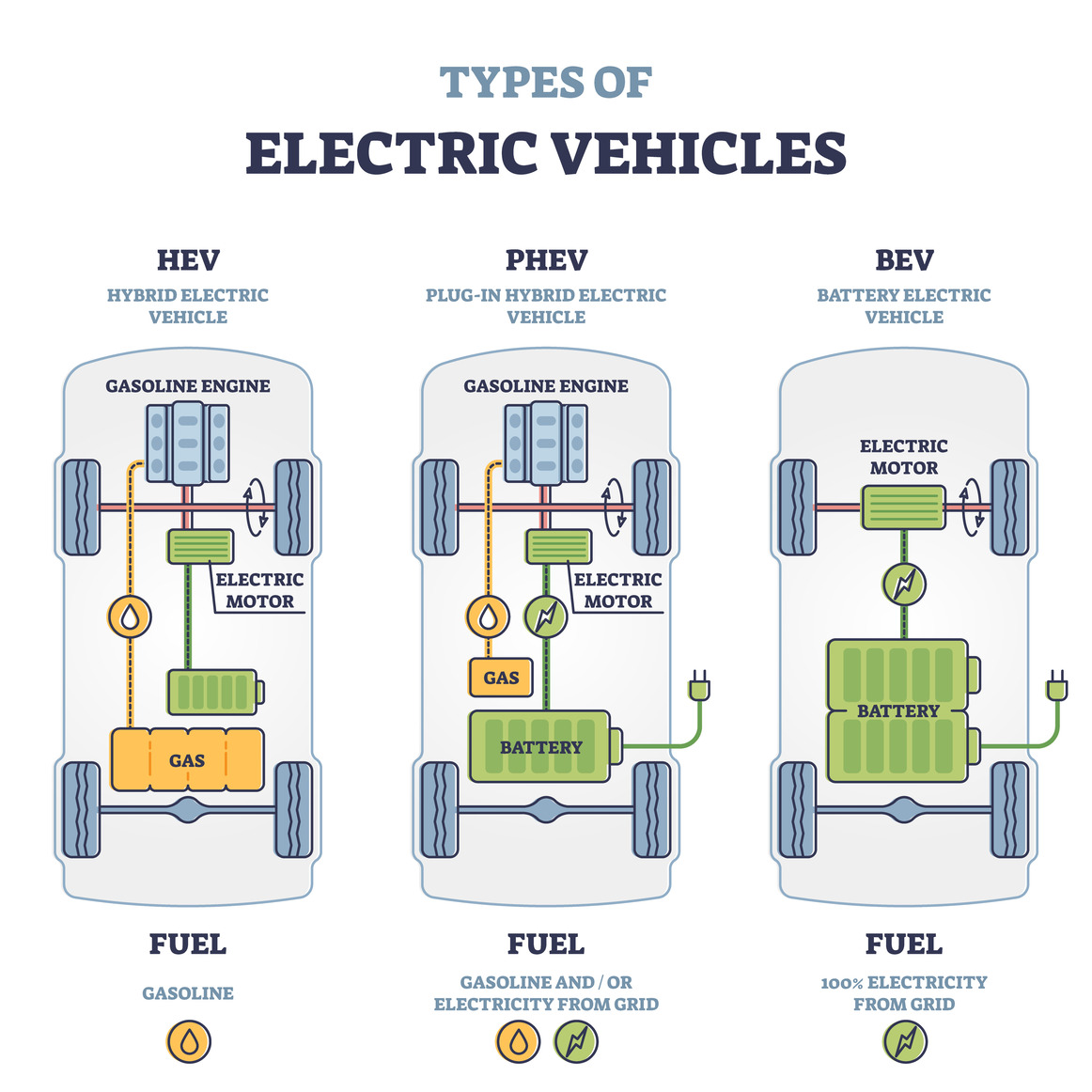
The answer depends heavily on how and where you drive. A petrol car pays for every kilometre through fuel consumption. A hybrid reduces this cost by combining a petrol engine with electric assistance, while a fully electric vehicle uses electricity instead of petrol.
For example, consider a driver travelling 15,000 km per year:
| Powertrain | Consumption | Approx. annual energy/fuel use |
| Petrol | 8L/100km | 1,200 litres |
| Hybrid | 5L/100km | 750 litres |
| EV | 18kWh/100km | 2,700kWh |
These are illustrative figures rather than official consumption figures for specific vehicles. Actual consumption varies according to the model, traffic, driving style, temperature, tyre pressure and air-conditioning use.
At October's Special 95 rate, a petrol car using 8L/100km would spend considerably more on fuel than a hybrid using 5L/100km.
An EV can reduce energy costs further, particularly when charged at home. However, public charging costs and the availability of convenient charging locations should also be considered.
Also read: Top 10 most fuel-efficient Chinese cars in the UAE in 2026
Should you buy an EV in the UAE in 2026?
An EV can make sense if your driving pattern matches its strengths.
Choose an EV if you mostly drive in the city
EVs are particularly well suited to regular urban commuting. Stop-start traffic can be less demanding on an electric drivetrain than on a conventional petrol vehicle, while regenerative braking can recover some energy during deceleration. If most of your daily driving consists of commuting, school runs and errands within Dubai or Abu Dhabi, an EV can be a practical option.
Home charging can make a big difference
Having a charger at home is one of the biggest advantages of EV ownership. Instead of making a separate trip to a fuel station, you can charge the vehicle while it is parked. This is especially convenient for drivers who have predictable daily travel requirements. Apartment residents should check whether EV charging is available in their building before buying an electric car.
EVs can reduce running costs
Electricity can cost less per kilometre than petrol, particularly for drivers who charge at home. There are also fewer mechanical components associated with an electric drivetrain, which can reduce some routine maintenance requirements. However, tyres, brakes, cooling systems and other vehicle components still require regular attention.
You need to plan longer journeys differently
For long-distance UAE travel, charging availability and route planning become more important. The national charging network is expanding, but EV owners should still check charging locations before undertaking longer journeys, particularly when travelling between emirates or into less populated areas.
Should you buy a hybrid in the UAE in 2026?
A hybrid can be a middle ground between petrol and electric ownership.
Hybrid can reduce fuel consumption without charging
A conventional hybrid does not normally need to be plugged into a charger. Its battery is replenished through regenerative braking and the vehicle's petrol engine. This makes the ownership experience familiar to most petrol-car drivers.
They can work well for mixed driving
Hybrids can be particularly useful for drivers who spend time in both urban traffic and on highways. The electric motor can assist the petrol engine during lower-speed driving, while the combustion engine provides the range needed for longer journeys.
There is no charging routine to manage
For buyers who live in apartments, travel frequently or do not have reliable access to charging, a hybrid can remove one of the biggest practical concerns associated with an EV. You can refuel at a petrol station in much the same way as you would with a conventional petrol car.
Fuel savings depend on the model
Not every hybrid delivers the same fuel economy. A small hybrid hatchback and a large hybrid SUV will have very different consumption figures. Buyers should therefore compare the manufacturer's claimed consumption and, where possible, real-world owner experience before making a decision.
EV vs hybrid: what makes more sense for UAE drivers?
| Factor | EV | Hybrid |
| Fuel cost | No petrol required | Lower petrol consumption |
| Charging | Required | Generally not required |
| Long-distance | Requires charging planning | Similar to petrol-car ownership |
| City driving | Very well suited | Very well suited |
| Home charging | Major advantage | Not required |
| Refuelling time | Longer | Similar to petrol |
| Range concerns | More relevant | Generally lower concern |
| Driving experience | Fully electric | Petrol + electric |
| Best suited for | City-focused drivers with charging access | Drivers wanting efficiency without changing habits |
Neither powertrain is automatically better for every UAE buyer. An EV is likely to be the stronger choice for someone with regular city driving, home charging and a desire to minimise energy and maintenance costs.
A hybrid can be more suitable for someone who drives long distances, travels between emirates regularly or does not have dependable access to a charger.
Are EVs and hybrids worth buying because petrol prices are rising?
Higher petrol prices can be a good reason to reconsider your next car, but they should not be the only reason to switch.
The current UAE fuel-price environment makes fuel efficiency more valuable than it was earlier in the year. At the same time, EV charging infrastructure is expanding and hybrid models are becoming more common.
For an urban driver with home charging, an EV can offer the lowest day-to-day energy costs. For someone who wants better efficiency without changing how they refuel, a hybrid may offer the better balance.
The most important calculation is therefore not simply petrol vs electric. It is the total cost of ownership based on how far you drive, where you drive, how you charge or refuel and how long you plan to keep the car.
Cars24 UAE says

The latest UAE petrol-price increase makes EVs and hybrids more attractive, but it does not mean every driver should immediately switch away from petrol. Petrol cars can still make sense for low-mileage drivers or buyers prioritising a lower upfront purchase price.
EVs offer the strongest running-cost advantage when charging is convenient, particularly for high-mileage urban drivers. Hybrids provide a simpler transition for motorists who want lower fuel consumption without depending on charging infrastructure.
For UAE buyers in 2026, the smartest choice is to match the powertrain to your routine. Check your annual mileage, charging access, typical journey length, purchase budget and expected ownership period before deciding.
Rising petrol prices are a reason to reassess your options, not a reason to rush into a new car.
FAQs
Q1. Are petrol prices increasing in the UAE in 2026?
Yes, UAE petrol prices increased again in October 2026, with all three main petrol grades moving higher than September. The UAE Fuel Price Committee reviews prices monthly, so rates can increase or decrease depending on global energy-market conditions.
Q2. Is an EV cheaper to run than a petrol car in the UAE?
An EV can be cheaper to run because it does not use petrol and electricity can cost less per kilometre. However, the actual saving depends on the vehicle's efficiency, electricity tariff, charging method, annual mileage and purchase price.
Q3. Is a hybrid better than an EV in the UAE?
A hybrid can be better for drivers who regularly travel long distances or do not have convenient charging access. An EV may be more suitable for city-focused drivers who can charge at home or work and want to minimise energy costs.
Q4. Are hybrid cars more practical for long-distance UAE driving?
Hybrids can be particularly practical for long-distance driving because they do not require the driver to plan charging stops. They can also provide better fuel efficiency than many conventional petrol vehicles, although efficiency varies between models.
Q5. Can I charge an EV at home in Dubai?
Yes, DEWA allows EV owners to install home charging equipment through approved electrical contractors. Electricity used for home charging is added to the normal DEWA bill and charged according to the applicable residential electricity tariff.


